A pet-friendly living room does not have to look like a kennel or be wrapped in protective covers. The useful question is simpler: where will the animal move, rest, drink, and track in dirt, and how can the room recover after an ordinary day? Start with those routines before choosing a sofa or rug. A house with a dog that sleeps by the window needs a different plan from an apartment with a cat that climbs shelving.
Watch the room before changing it
For a few days, notice the route from the door to the water bowl, the favourite sleeping spot, and where people actually sit. Look for the points where paws turn sharply on a slippery floor or a tail reaches a low table. Measure those routes with the door open and the chairs pulled out. Keep a comfortable path clear rather than filling every wall with furniture; a pet bed that blocks the passage will be moved around the room, not used consistently.
Decide which activities you want to welcome on the sofa and which need their own place. This is a household decision, not a design rule. If the pet already uses the couch, a durable, removable throw in one preferred position may be more realistic than hoping it will suddenly stay off. If the animal prefers a cool floor, do not force a padded bed into a warm corner just for the photograph.
Place the resting zone where the household works
A resting spot near people but outside the busiest walkway gives an animal a way to settle without being stepped around. Test it at different times of day: afternoon sun may turn a pleasant morning spot into the hottest part of the room. In a Bali home with open doors or a terrace connection, also look at the route to the outside. A bed immediately beside the threshold collects dirt and can get wet during sudden rain.
For an older dog, consider the effort of getting up and crossing the floor. A thick mat is not automatically better if it slides when the dog steps onto it; a stable base and an easy-to-clean cover matter more. Cats may prefer a higher perch with a view, but any shelf or climbing furniture must be securely fixed and kept away from fragile objects. Plan these places alongside seating in the living room layout, not as an afterthought.
Choose floors for grip, cleaning and the room beneath
A hard surface can be practical for hair and spills, yet a glossy finish can make quick turns uncomfortable for a pet. Test a sample with clean and slightly damp shoes, and ask whether the manufacturer provides a slip-resistance rating appropriate to the intended use. A small, grippy runner can improve one frequently used route, provided its edges lie flat and it does not become a trip hazard for people.
Think beyond the top finish. Spilled water, accidents, and rainwater at an open door can reach joints, skirting and the subfloor. Check the floor's installation and cleaning instructions before assuming that every tile, timber product, or vinyl plank tolerates the same moisture exposure. The separate guide to flooring in humid Bali homes explains why the substrate and thresholds deserve attention before a finish is selected. Avoid promising that any one material is completely scratch-proof or waterproof.
Make upholstery a maintenance decision
Ask for a fabric sample and the actual care code before buying a sofa. Test how easily hair comes off the sample and whether the weave catches on claws; consider the pet's behaviour rather than relying on a generic “pet-proof” label. Removable, washable covers are useful only if the washing instructions fit the household's routine and the covers can be put back without difficulty. Cushion construction also affects whether a favourite seat holds its shape.
Mid-tone or subtly textured fabric may disguise the occasional mark between cleans, but colour does not make a fabric easier to wash. Leather and coated surfaces can wipe clean in some situations yet may show claw marks; dense woven cloth can be comfortable but still trap hair. Compare the options with the care instructions in hand. For a deeper fabric-by-fabric discussion, read the sofa upholstery guide for tropical homes. Here, the main design decision is where a pet uses the room and how easily that zone can be maintained.
Give feeding, toys and cleaning supplies a home
Keep water in a stable, accessible place that does not make the main walking route slippery. A washable mat below the bowl helps contain splashes, but lift it regularly so moisture does not remain trapped against the floor. Put food and treats in closed storage appropriate for the product and away from heat and children. Keep cleaning products, cables and small objects beyond the pet's reach; decorative baskets are not secure storage for hazardous items.
Provide an obvious place for leads, grooming tools and toys near the route where they are used. A shallow drawer or lidded box works better than a deep decorative bin if a person needs to find a lead quickly. For a household that needs more than freestanding storage, custom interior build can help integrate low, accessible drawers with the rest of the room. Discuss ventilation and access to electrical outlets before closing any existing niche with cabinetry. Storage should make cleaning easier, not create a hard-to-reach gap behind the sofa.
Check hazards from the pet's height
Crouch to the animal's eye level and look for exposed cords, loose rug corners, accessible bins, unstable floor lamps and small decorative pieces. Secure tall furniture to the appropriate wall structure where required, and keep breakables away from a tail's reach. Check plant species with a trusted veterinary source before placing them in an accessible pot; a plant that looks harmless to a person may be unsuitable for a pet. Keep medicines and household cleaners in closed storage.
At doors and balcony openings, check how far the pet can push or squeeze, not just whether the opening looks narrow from standing height. Screens and barriers need to suit the animal and be installed securely. If a pet has limited mobility, reduce jumps between a favourite seat and the floor and discuss any health-specific needs with a veterinarian rather than expecting a furniture change to solve a medical problem.
Keep the room pleasant for people too
The easiest pet-friendly arrangement often has fewer delicate surfaces, a predictable place for everyday items, and a clear route for vacuuming. Keep a favourite toy and rest spot in the room without turning every corner into storage. If the space is shared with guests, put cleaning supplies within reach and choose a layout where a guest can sit without moving the pet's bed. Those details make daily life easier than a styled photo of an empty room.
Before committing to new furniture, draw a simple plan showing doors, windows, seating, the pet's preferred resting spot, food and water, and storage. Walk through it with the doors open. Move a chair or a temporary mat to test the route for a week. Only after the arrangement works should you invest in new upholstery or built-ins. Browse the furniture collection with your actual measurements and cleaning needs in hand rather than choosing from a photograph alone. If the layout still feels cramped, discuss the room with ZEF LIVING and share photographs, measurements and the pet's daily habits. The aim is a room that stays comfortable for its occupants, including the one with paws.
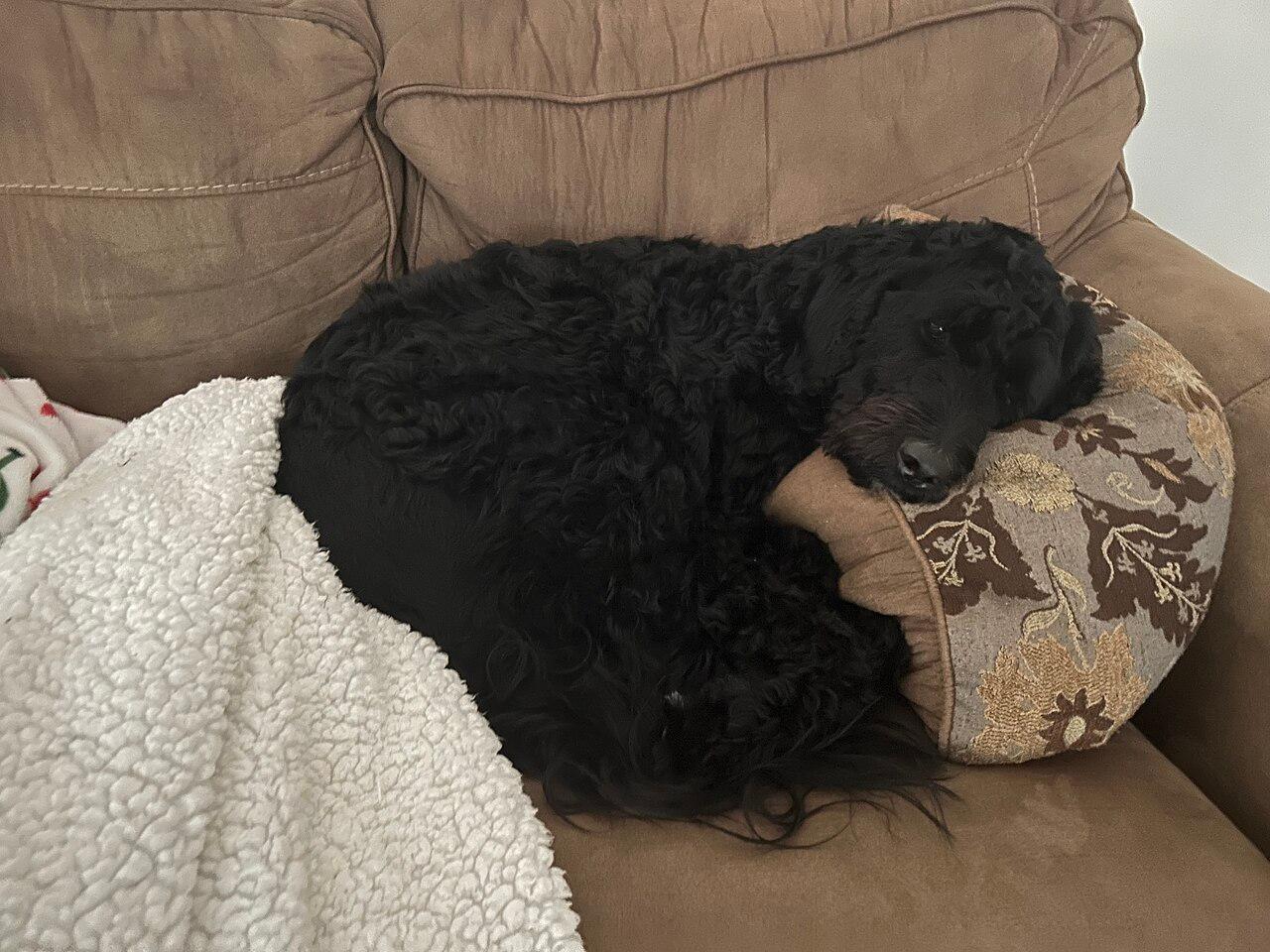
Cover photograph: “Golden Mountain Doodle Laying On Couch” by Sir MemeGod via Wikimedia Commons, licensed under CC BY 4.0. Original photograph uploaded without editing; responsive display may crop its framing. Illustrative image of another household, not a ZEF LIVING project.