A sofa can look perfect in a showroom and feel wrong after a few months in a lived-in home. Fabric changes the way a seat feels against skin, how readily it shows marks, and how much effort it takes to keep the room looking inviting. In a tropical home, that decision deserves more attention than a color swatch under showroom lights. The aim is not to find a fabric with a magical “humidity-proof” label. It is to match the upholstery, cushion construction, and daily care routine to the room you actually use.
This guide is for anyone comparing sofa fabrics for a home in Bali or another warm climate. It focuses on practical tests you can make before buying or reupholstering, rather than ranking one material as universally best.
Start with the sofa's job, not the fabric name
Ask where the sofa will sit and who will use it. A formal sitting room that is used on weekends has a different wear pattern from a family sofa beside an open terrace. A seat near a sunny window faces fading and heat; one used by children or pets faces food, muddy paws, and repeated spot cleaning. A villa that is closed between visits may need a different maintenance plan from an occupied home with regular ventilation.
Write down your three most likely stresses: direct sun, spills, abrasion, pet hair, dust, or long periods with the doors shut. Then compare fabrics against those stresses. If the space itself needs planning first, ZEF LIVING's living room interior design service is the more relevant starting point than choosing upholstery in isolation.
Choose between texture, cleanability and comfort
Woven upholstery
A tightly woven fabric can provide a calm, tactile finish without the slippery feel of some coated options. The important question is how that specific weave behaves under friction: loose loops may catch on claws or hardware, while a dense weave may be easier to vacuum. Look at a large sample in daylight and rub it gently with a light and a dark cloth. Check whether fibers lift, the color transfers, or the texture changes. A fabric that feels good to touch but snags immediately is not a sensible choice for a busy seat.
Removable and washable covers
A removable cover can be useful, but “removable” is not the same as “machine washable.” Read the maker's care label for the exact textile and lining. Ask whether the cover can be replaced separately, whether shrinkage is possible, and whether the cushions are easy to put back without distorting seams. If the cover is dry-clean-only, decide whether that service is realistic for your location before treating it as a low-maintenance purchase.
Leather and coated surfaces
Leather can wipe clean after some spills, but it can also feel warm against bare skin and requires care appropriate to its finish. Coated or imitation-leather surfaces vary widely: some are easy to wipe, while others can peel as the coating ages. Do not assume a label tells you the lifetime of a particular sofa. Request the manufacturer's cleaning instructions and warranty terms for the exact product, and sit on a sample long enough to notice the feel in a warm room.
There is no universal winner. A soft open weave may be lovely in a quiet air-conditioned room and frustrating on a sofa used daily beside a garden. A wipeable surface may suit a frequently used seat but be uncomfortable for someone who prefers breathable fabric.
Test the sample in the conditions it will face
Take fabric samples home if the seller permits it. Put them beside the floor, curtains, and other large surfaces; color can shift under daylight and warm evening lamps. Leave them in place for a few days rather than choosing from a small screen image. Photograph the samples in morning and late afternoon light, and look at the color against the room rather than against a white showroom wall.
Ask the supplier about abrasion data, colorfastness, recommended cleaning products, and whether the displayed swatch matches the production batch. Test any cleaning method on an inconspicuous area first. If you expect spills, ask for a larger offcut and test a small amount of water according to the supplier's instructions. Do not pour liquid onto a finished showroom sample or use harsh chemicals as an improvised test.
Feel the cushion while seated, not just the fabric while standing. A dense textile over a thin, sagging cushion will not solve a comfort problem. Check seams, seat depth, back support, and how easily the covers open. If the sofa is being made for a particular room, take accurate measurements of the available wall length, doorways, and delivery route before ordering.
Plan for airflow without promising a miracle fabric
In a humid climate, moisture can accumulate in rooms with poor ventilation, especially when a home remains closed for extended periods. Upholstery choice alone cannot correct a leak, condensation, or persistent dampness. Address the source of moisture first: inspect the room, maintain suitable airflow, and follow the furniture maker's placement and care guidance. Keep upholstered furniture away from actively wet walls or areas where rain enters.
For homes opening onto an outdoor area, consider how the sofa sits relative to doors, wet feet, and incoming rain. The arrangement may matter more than a premium fabric treatment. The broader indoor-outdoor living guide explains how shade, circulation, and material decisions work together. If the whole room feels awkward, revisit the living room layout guide before committing to a larger sofa.
Look beyond the upholstery when comparing sofas
Fabric is a visible layer; the frame, cushions, stitching, and replacement options determine much of the long-term experience. Ask what the frame is made of, whether the cushion filling can be renewed, and whether replacement covers or matching fabric are available. Compare seams at the corners and the underside of the seat. A beautiful fabric on a sofa that cannot be repaired may be a poor fit for someone who expects to keep it for years.
Also consider scale. A deep sofa may feel generous in a store and overwhelm a narrow living room. Mark its footprint on your floor with removable tape, then walk past it and open nearby doors. If the sofa is one element in a larger furnishing plan, browse ZEF LIVING's furniture collection for a sense of seating and table proportions; confirm current product specifications directly before making a purchase decision.
A simple decision checklist
- Use: Is this an occasional seat or the place everyone sits every day?
- Exposure: Will it receive direct sunlight, garden dust, pet traffic, or occasional rain at an open doorway?
- Care: Are the exact cleaning instructions compatible with the time and services available to you?
- Repair: Can covers, foam, or individual cushions be replaced without replacing the entire sofa?
- Fit: Have you measured the room, circulation space, doors, and delivery route?
- Feel: Have you sat on the finished cushion in conditions similar to the room where it will live?
Bring this list and a room photograph to a supplier. If you are comparing several fabrics, note the product code and care label for each sample rather than relying on memory. Choose the option whose daily demands you can live with, not merely the one that photographs best.
Make the room work as a whole
Upholstery has to cooperate with the rest of the home. A textured neutral seat might make sense with a patterned rug; a darker sofa might feel heavy in a dim room. Storage, lighting, and walking routes also affect whether the seating area feels comfortable. For a room that needs a coordinated plan rather than a replacement sofa alone, see ZEF LIVING's whole-home interior design service or share your brief with the team.
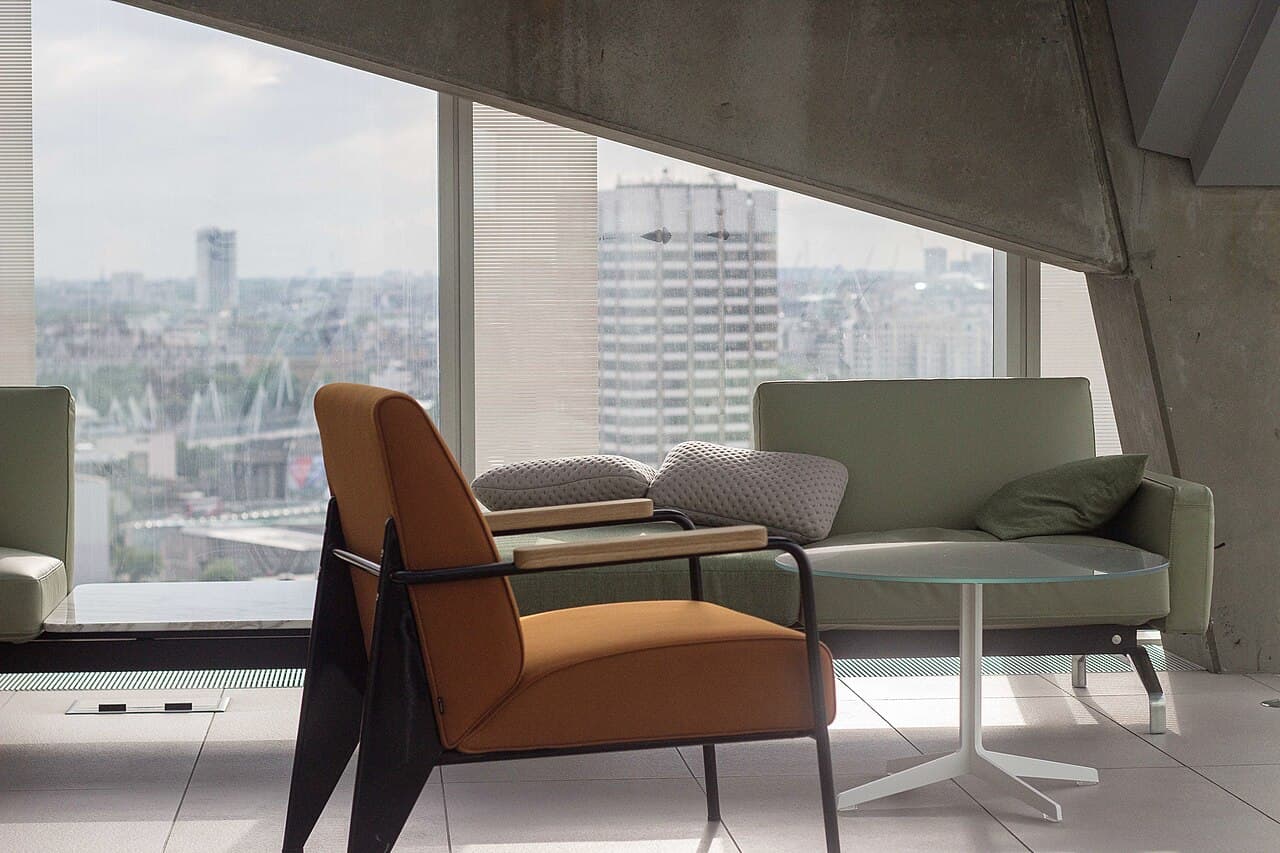
Cover photo: Alexander Pemberton, Wikimedia Commons (CC0 1.0). Illustrative London interior; not a ZEF LIVING project or a Bali property.